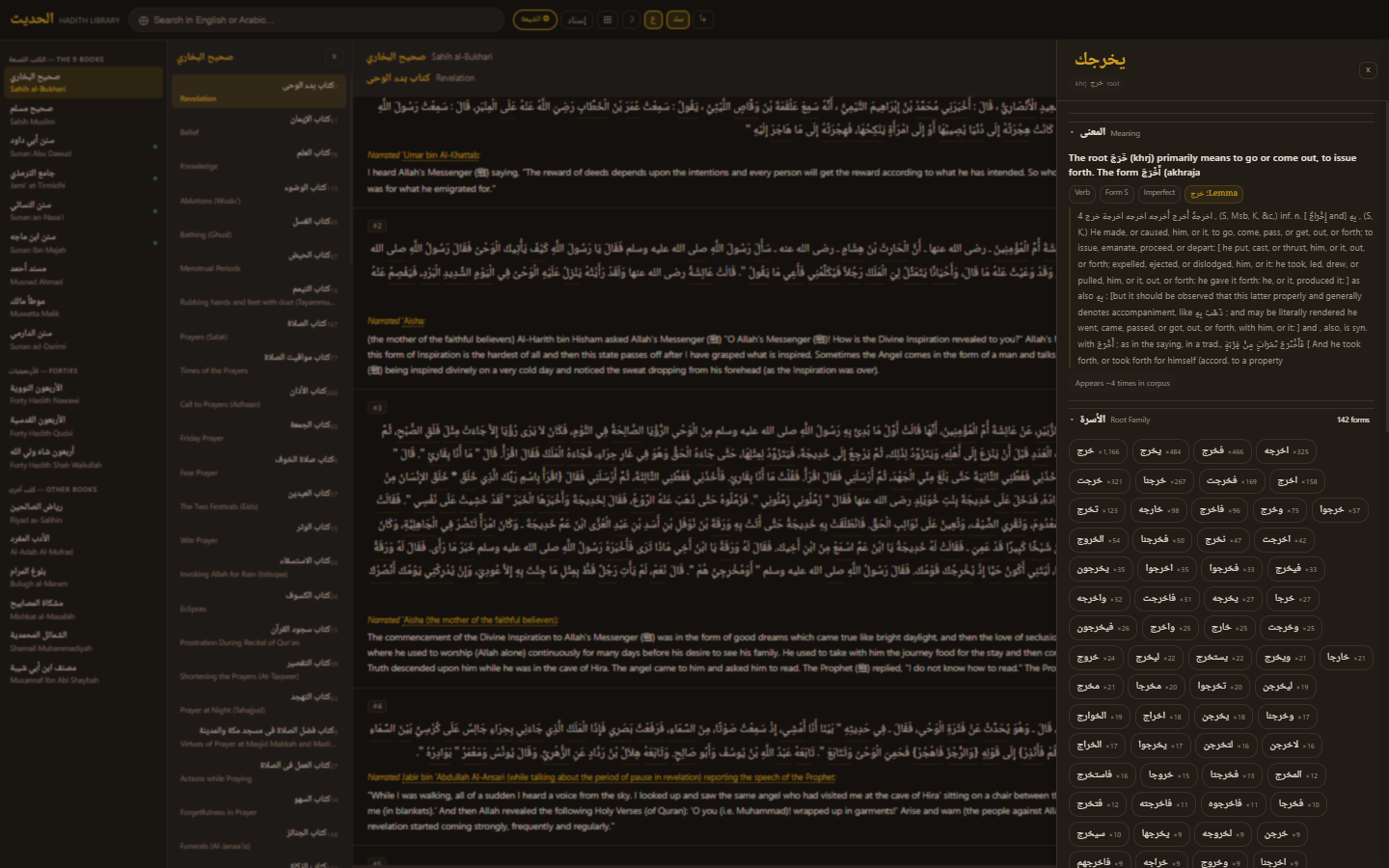
Step 1 — Read
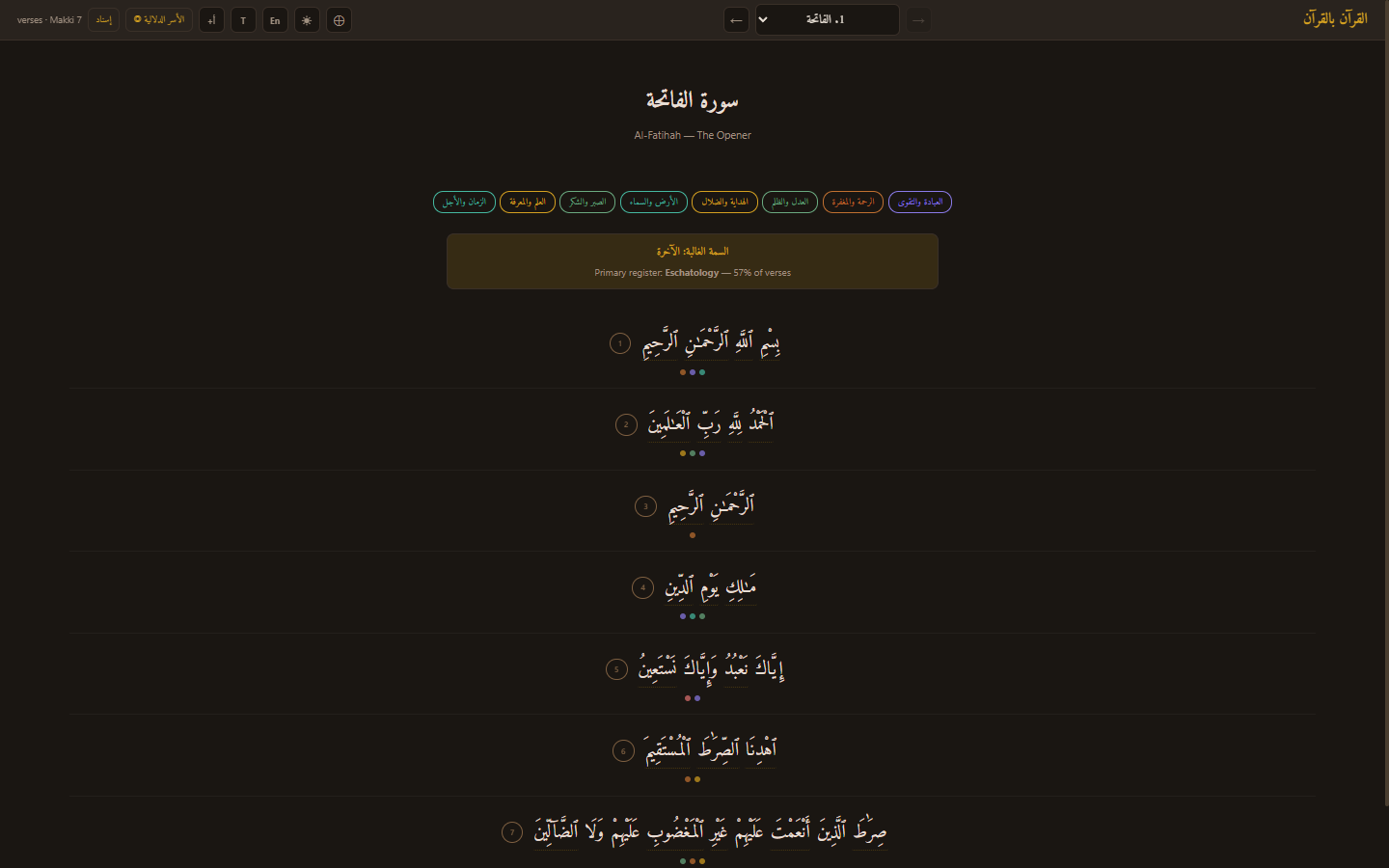
Open the Quran
Select any surah. The Arabic text is displayed with full diacritics and verse-by-verse layout.
Every word is live — this isn't a static PDF.
Open Quran Reader →
Step 2 — Discover
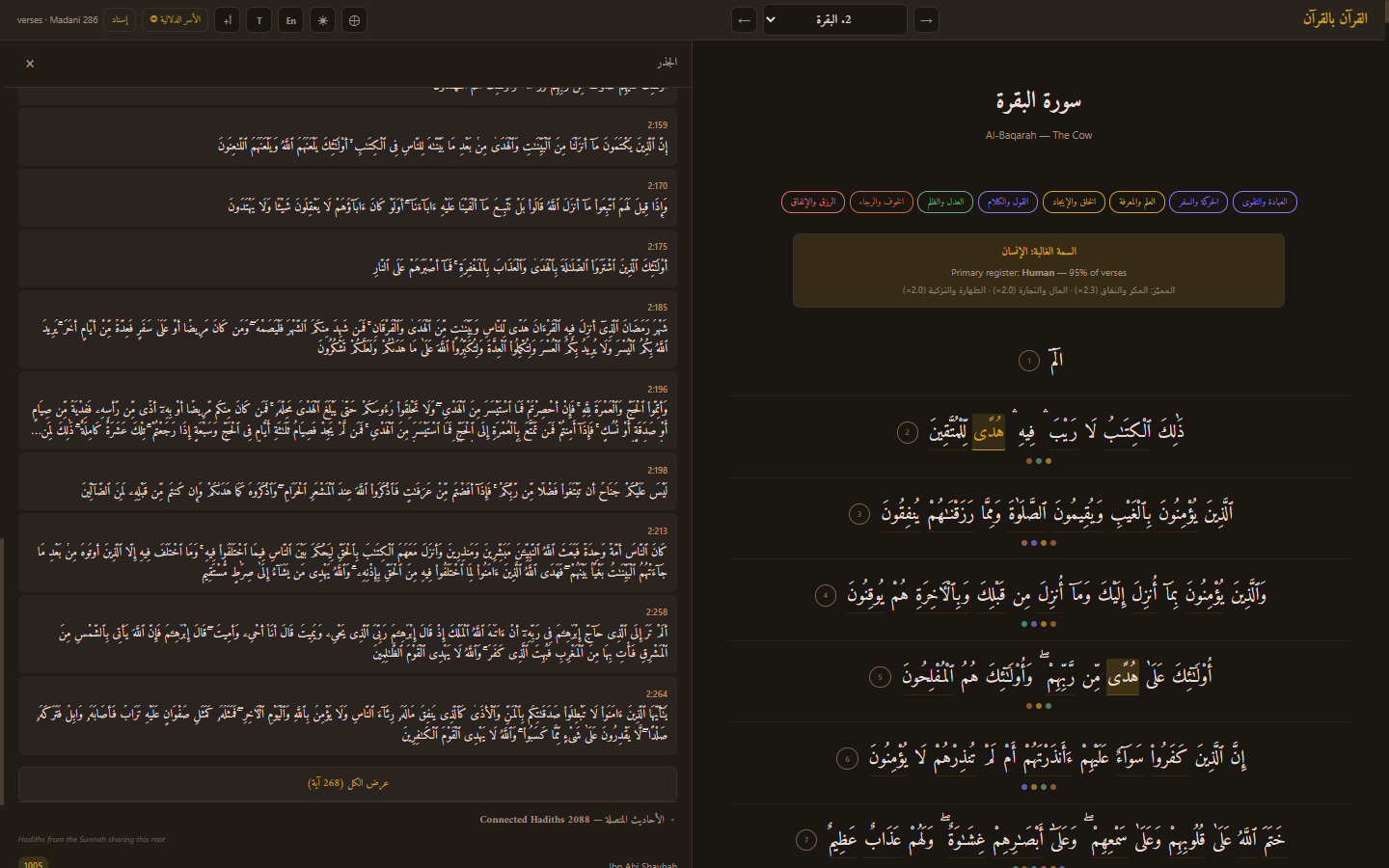
Hover, Then Click
Hover any Arabic word for an instant English meaning.
Click it to open the Root Panel — the three-letter root that gives the word
its core meaning, plus its Quranic frequency and Meccan/Medinan distribution.
Try it: Surah al-Baqarah →
Step 3 — Understand
Classical Meaning & Context
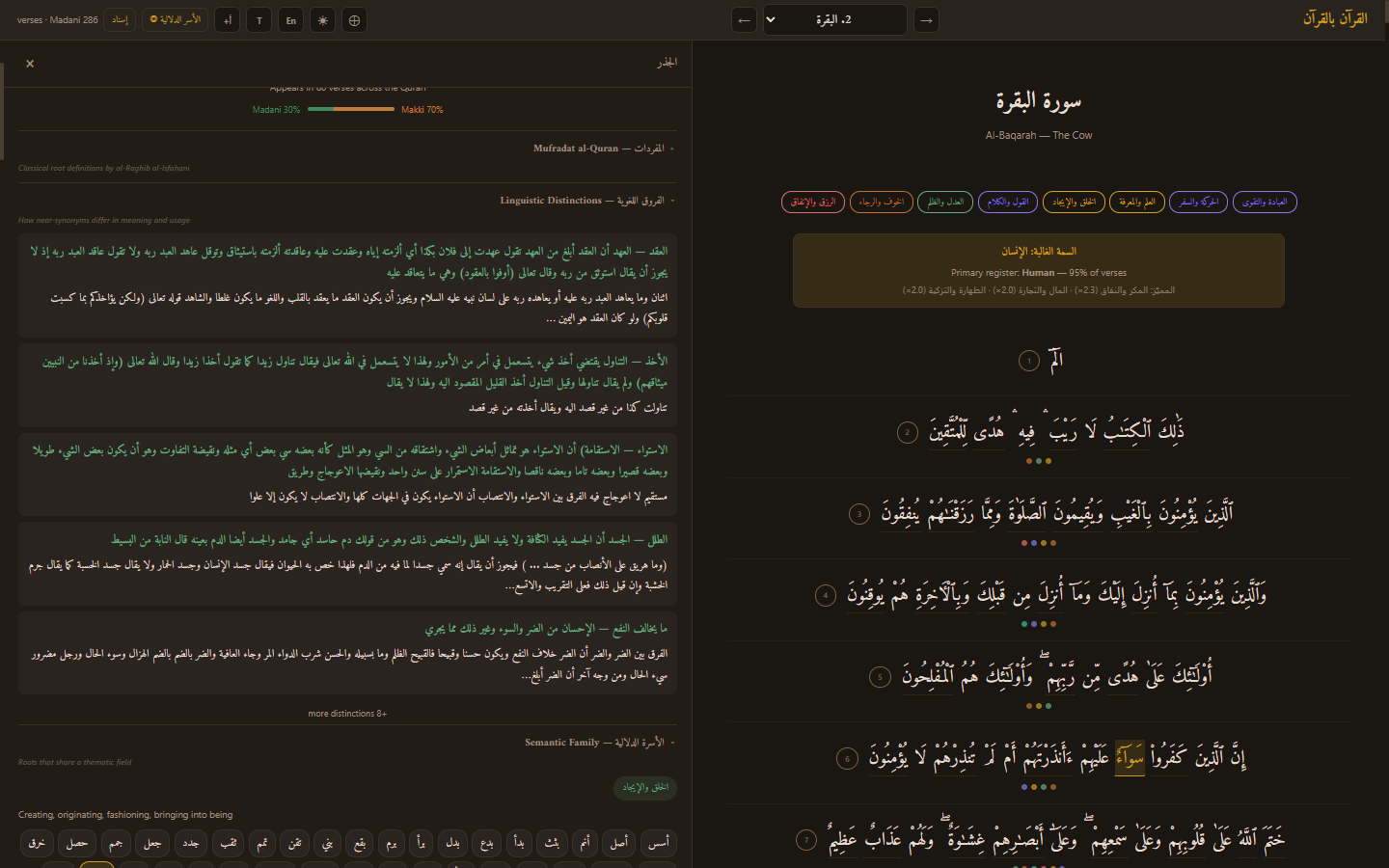
Toggle open Mufradat al-Quran for al-Raghib al-Isfahani's classical definition of
the root — the standard Quranic lexicon for over 900 years.
Linguistic Distinctions shows how near-synonyms differ. Arabic has multiple words for concepts like "knowledge" or "fear" — each root carries a distinct shade of meaning.
Linguistic Distinctions shows how near-synonyms differ. Arabic has multiple words for concepts like "knowledge" or "fear" — each root carries a distinct shade of meaning.
Step 4 — Connect
Families & Connected Verses
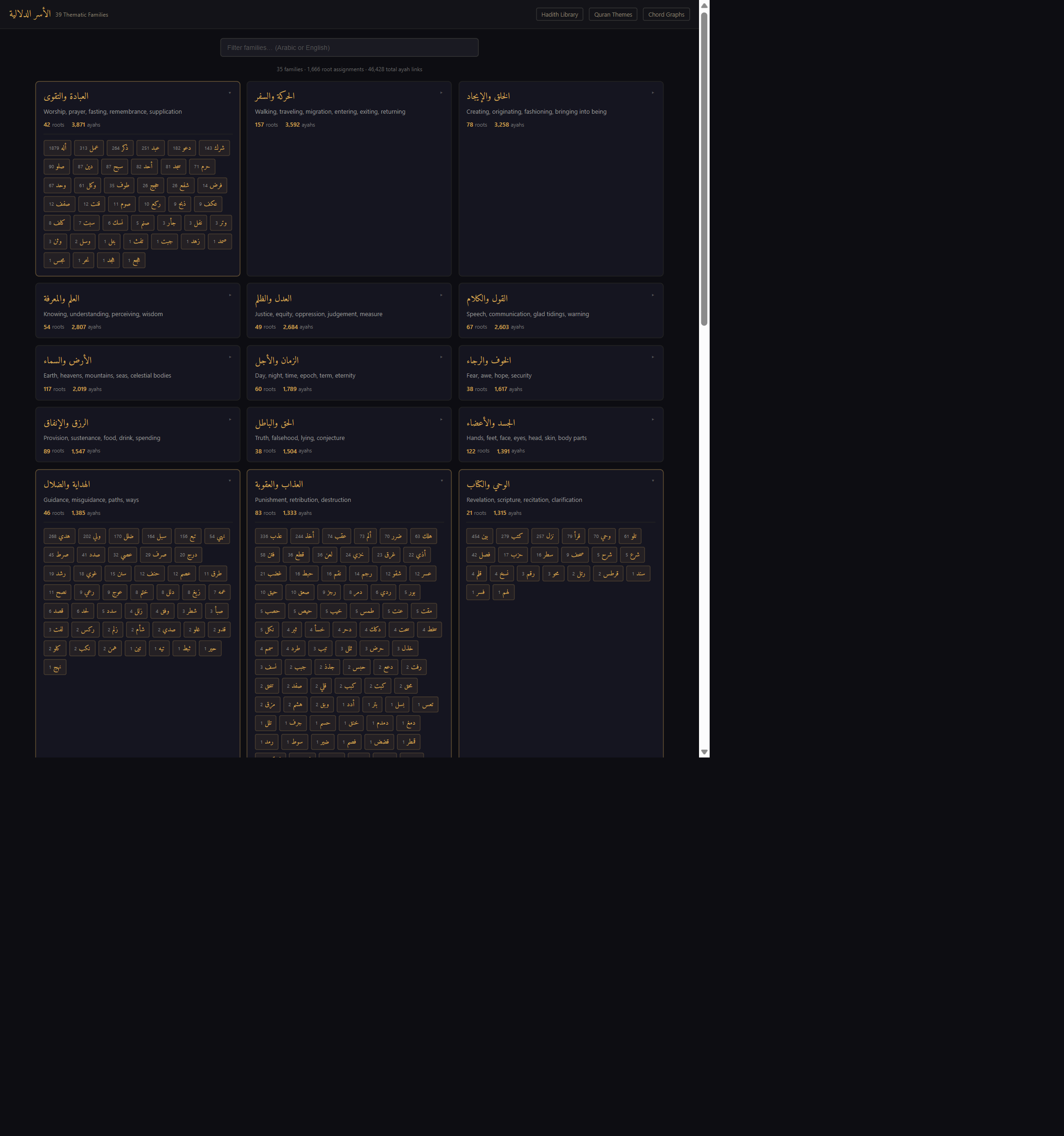
The Semantic Family panel shows which thematic group this root belongs to —
39 families like mercy, justice, prayer, trade, eschatology.
Connected Verses lists every ayah in the Quran containing this root, so you can trace how a concept threads through different surahs.
Browse All 35 Families →
Connected Verses lists every ayah in the Quran containing this root, so you can trace how a concept threads through different surahs.
Step 5 — Bridge
Into the Hadith Corpus
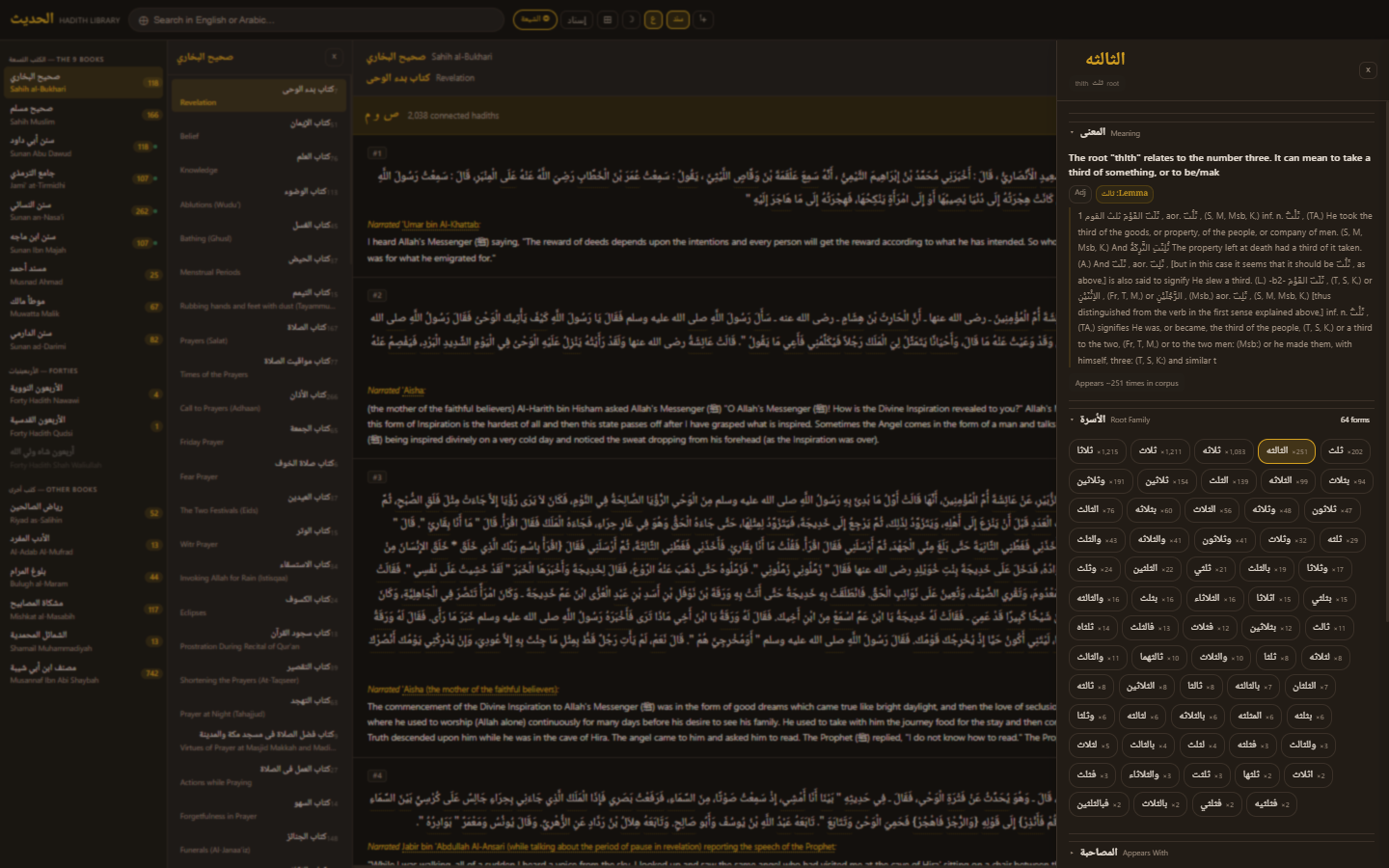
At the bottom of the root panel: Connected Hadiths. Click through to the Hadith
Library filtered by this root across all 18 books. Every matching word is
highlighted in gold
so you can see exactly where the connection is.
1,336 Arabic roots bridge 6,236 ayahs to 112,000+ hadiths — the way classical scholars studied Quran and Sunnah together.
Try it: root صلو (prayer) →
1,336 Arabic roots bridge 6,236 ayahs to 112,000+ hadiths — the way classical scholars studied Quran and Sunnah together.
Step 6 — Repeat
Every Hadith Word Leads Back
In the Hadith Library, every Arabic word is clickable too. Click one to see its root,
its meaning, and every other hadith sharing that root. The cycle continues —
Quran to Hadith, Hadith to Quran, all through shared roots.
Open Hadith Library →